1

Plowing the Soil
Loosen and turn the soil to prepare a fertile bed. ≈ 3 days
Most exporters show you the warehouse and the container. We'll show you the whole journey — every stage that turns a tiny seed into the deep-red, sun-cured, lab-tested, export-grade chilli that lands in your country.
A growing season of roughly 150 days from sowing to red harvest, followed by 5–7 days of sun-curing and several days of grading before any pod earns a spot in an export bag. Each stage below corresponds to a real point in the Vijaya Enterprises farmer-supplier and warehouse calendar.
Loosen and turn the soil to prepare a fertile bed. ≈ 3 days
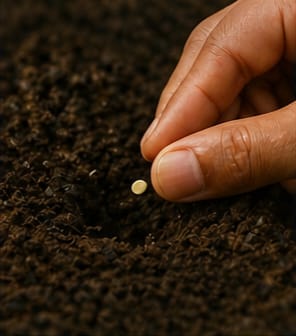
Place seeds in the soil and cover gently. ≈ 2 days

The seed sprouts and pushes through the soil. ≈ 1 week
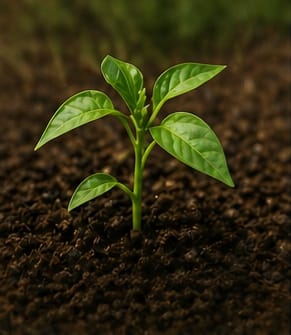
The seedling grows and develops more leaves. ≈ 2 weeks
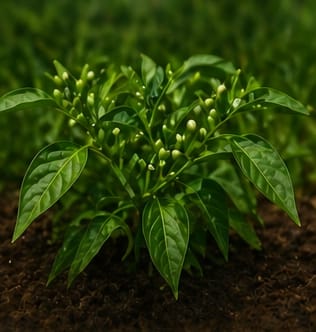
The plant grows bigger and becomes bushy. ≈ 3 weeks
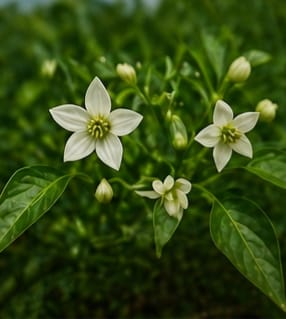
White flowers bloom on the plant. ≈ 2 weeks
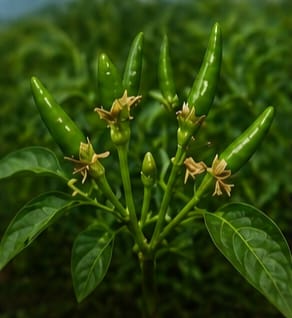
Tiny green chilli nubs appear after flowering. ≈ 10 days
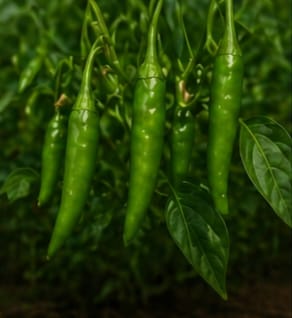
Chillies grow bigger and turn deep green. ≈ 3 weeks
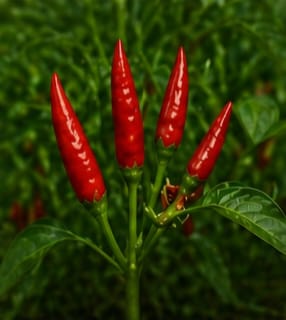
Chillies ripen and turn bright red. ≈ 2 weeks
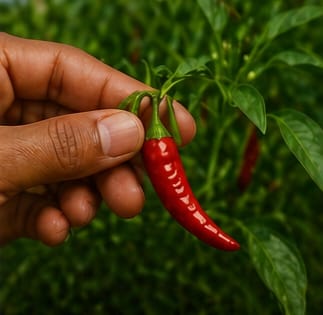
Ripe red chillies are plucked from the plant. ≈ 1 week
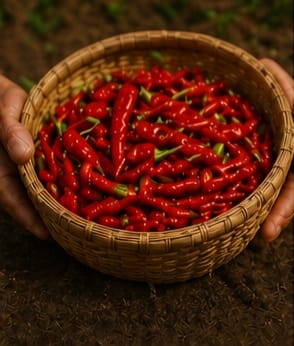
Freshly plucked chillies are collected in baskets. ≈ 1 day
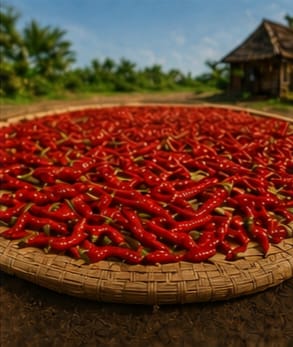
Spread under the sun and turned daily until moisture drops below 10%. 5–7 days
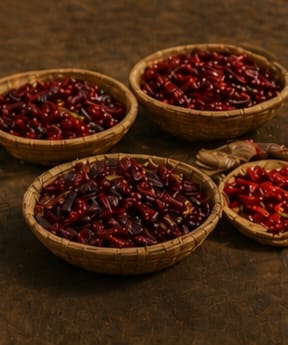
Sorted by size, colour, stem condition and broken percentage. ≈ 3 days
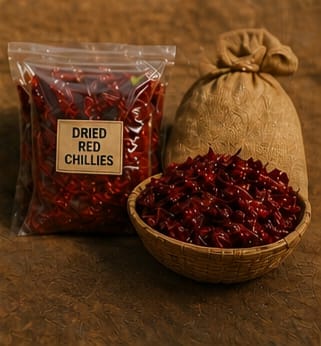
Packed into 25 kg or 50 kg bags and marked to buyer spec. ≈ 2 days
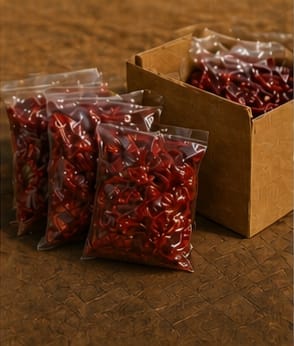
Stored dry, then loaded into FCL or LCL containers. ≈ 5 days
The 15-step lifecycle ends at "storage." But for an export-grade lot, that's where our work really begins. Here's what Vijaya Enterprises does between the warehouse and the bill of lading.
Every lot tested with a calibrated moisture meter. Anything above 10% is rejected or sent back for further drying — high moisture is the number one cause of rejected containers.
Lab-measured pigment value (American Spice Trade Association units). Critical for buyers who blend by colour rather than weight — Kashmiri 90+, Byadgi 60+, Teja 68+, Guntur 32+.
Tested at NABL-approved labs for aflatoxin (ppb), pesticide residue, and microbial load. We share the COA before container loading, not after.
Sorted by length, colour uniformity, broken percentage, and stem condition. Foreign matter (dust, leaves, stones) brought to under 1% by hand-sorting under tube-light inspection.
Post-pack fumigation per the importing country's phytosanitary requirements, with the treatment certificate enclosed in the document set.
Once we agree on price and spec, here's how the next 18 to 30 days typically unfold.
Variety, grade, packaging, port, payment term and target ETA all locked. Pro-forma invoice issued; advance or LC initiated.
Procurement head walks the yard, picks lots matching your spec, and sends samples to the lab.
Pre-shipment sample dispatched by courier, with digital photos shared over WhatsApp the same day.
Lot graded, packed in the agreed bag type, marked with shipping marks, and palletised if required.
Phytosanitary certificate, certificate of origin, fumigation certificate, COA, packing list and commercial invoice prepared.
Container moved to Krishnapatnam, Chennai or Nhava Sheva. Bill of lading issued post sailing; documents released as per payment term.
Open-yard sun-curing takes 5 to 7 days in the Telangana harvest season, with the lot raked and turned daily so pods dry evenly. The target is moisture below 10%, measured with a calibrated meter at multiple points in the lot before it is allowed onto the sorting line.
Roughly 150 days from sowing to red harvest, then 5–7 days of sun-curing and several days of grading. Once a purchase order is confirmed, the export cycle from procurement to vessel sailing typically runs 18 to 30 days, including lab testing, packing, fumigation and documentation.
Five checkpoints: calibrated moisture testing to below 10%; lab-measured ASTA colour; aflatoxin and pesticide-residue testing at NABL-approved labs; physical grading for length, colour uniformity, broken percentage and foreign matter under 1%; and post-pack fumigation to the importing country's phytosanitary requirement.
Phytosanitary certificate, certificate of origin, fumigation certificate, laboratory COA, packing list and commercial invoice — all prepared before the vessel sails rather than chased after. The bill of lading is issued post sailing and released according to the agreed payment term.
Both formats are supplied. Stem-on lots hold their shape better in transit and suit whole-pod retail; stem-cut lots pack denser per container and suit grinding, flaking and oleoresin extraction. Specify the format at enquiry stage — it changes both grading time and container weight.
We send a 3-minute walkthrough video — drying yard, sorting line, packing bay, dispatch dock — to every serious enquiry. Just ask for it.